
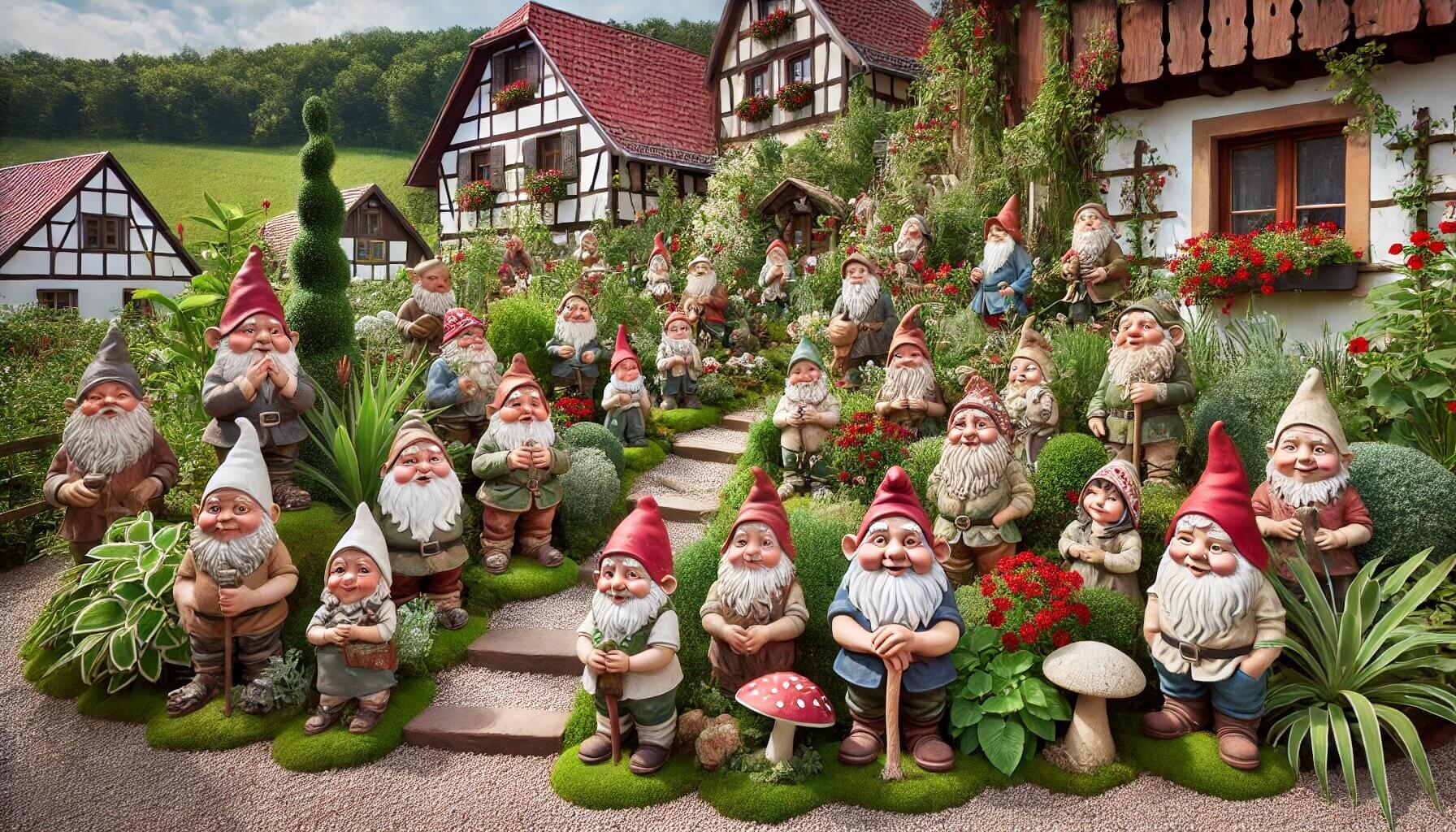
The garden gnome, as we know it today, has deep-rooted traditions in German culture, especially in the region of Thuringia. But who created the first garden gnome, and how did this figure become a permanent fixture in gardens around the world?
It was the year 1872 when the first commercial garden gnomes were made in Gräfenroda, a small village in Thuringia. Two names stand out in particular in this movement: Philipp Griebel and August Heissner. Both were talented potters who had mastered the art of shaping gnomes.
Philipp Griebel used his skills to create garden gnomes that were not only decorative but also told a story and had character. His gnomes, often inspired by local legends and forest spirits, quickly found favor with people.

August Heissner, on the other hand, is often regarded as the pioneer of the industrial production of garden gnomes. His company specialized in mass-producing garden gnomes, which significantly accelerated the spread of these little figures. Thanks to Heissner's vision, garden gnomes became synonymous with German garden art.
Enthusiasm for garden gnomes quickly spread beyond the borders of Thuringia and Germany. They became a symbol of humor and creativity in gardens worldwide. Today, garden gnomes stand not only for tradition but also for the joy of personally designing one's own green space.
Our modern variety of garden gnomes, from classic to modern, owes much to the foundations laid by Griebel and Heissner. As lovers of these charming garden inhabitants, we can look back with pride on their rich history while also celebrating their enduring place in our gardens.