
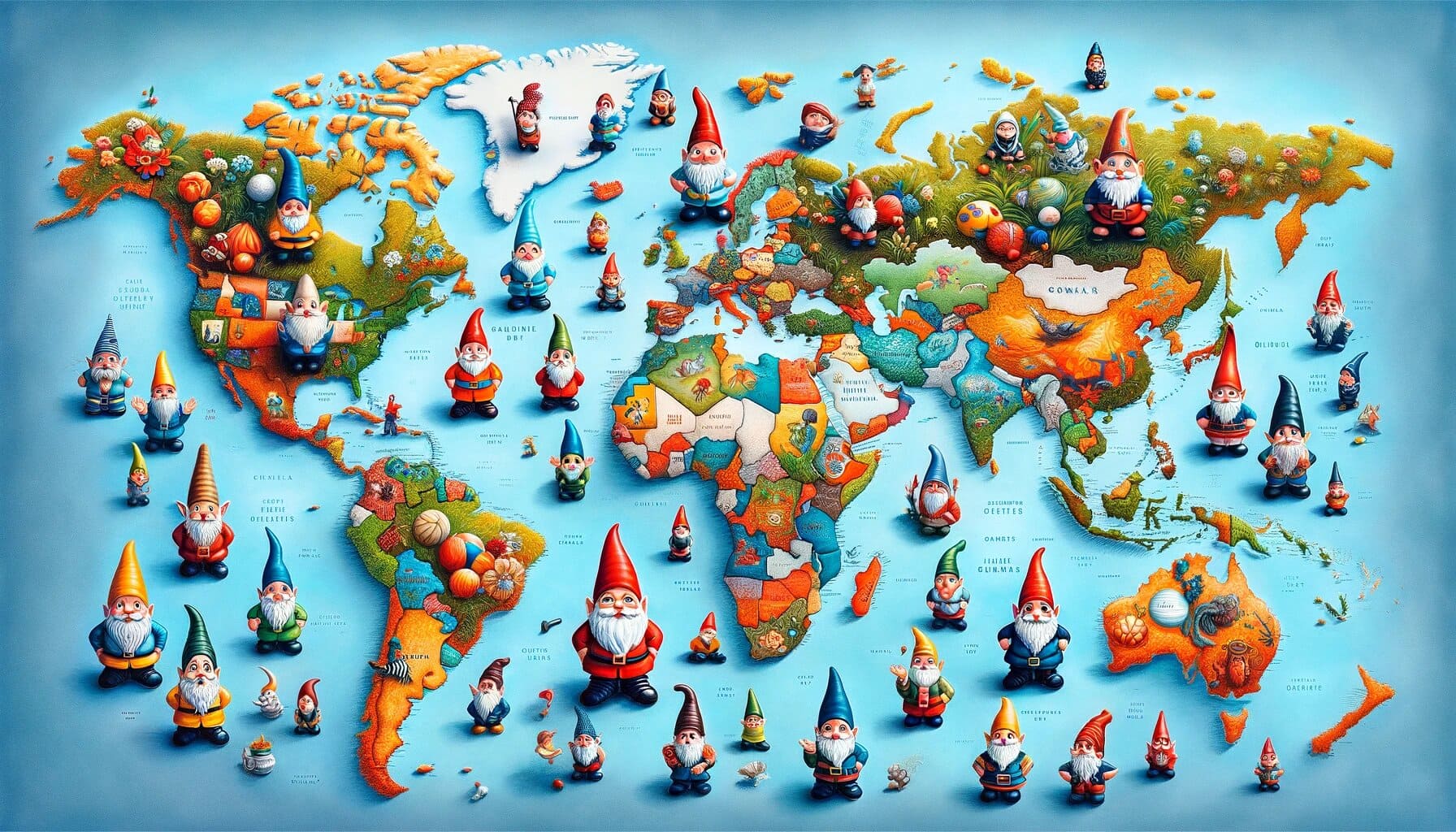
Garden gnomes are a popular addition to many gardens, but their origins remain largely a mystery.
While some sources credit the Germans, others trace their roots back 150 years to the Renaissance Boboli Gardens in Florence.
In ancient Greece and Rome, these small anthropomorphic figures often served a protective function and were used in gardens to guard gates.
But where do you find most garden gnomes? In which country?

In which country do you find most garden gnomes?
If you enjoy gardening, you are probably curious about where you can find most garden gnomes. The answer to this question depends on where you are and what language you speak.
Garden gnomes can be found throughout Europe. They are common in gardens and parks and are often the most popular garden ornament.
In Europe, there are museums, festivals, and exhibitions dedicated to garden gnomes. One recent example is a two-year exhibition on the science of nanotechnology, which also featured garden gnomes.
For example, if you live in the United States, you will certainly find garden gnomes. But if you live in Europe, you will find most of the funny gnomes in Germany.
Germany
In the 19th century, garden gnomes were very popular in Germany. They were originally made by the company HEISSNER in Thuringia, and its founder, August Heissner, is generally considered the "inventor" of the German garden gnome.
His company has been in business for over 130 years and is now a worldwide distributor of garden products. The company is based in Lauterbach, Germany.
The popularity of garden gnomes in Germany is the direct result of a long-standing gardening tradition.
The gnome has long been a symbol of German culture, and many Germans consider it a lasting monument to their heritage.
A few years ago, the country lacked garden gnomes, even though more people were gardening.

England
In the United Kingdom, garden gnomes are often considered old-fashioned or tacky. However, successive COVID-19 restrictions caused sales of these sculptures to rise so sharply that they led to supply shortages.
Australia
In the 1950s, Australian garden gnomes became a popular way to decorate gardens.
They were painted in bright colors and became popular in gardens across the country. Today, Amazon is trying to make them popular again with its new garden shop. With a little luck, they will ensure that more people take an interest in garden gnomes again.
Originally, these figurines were only available to the upper class. As they became increasingly popular, they were also bought by the general public. Several gnome festivals were held worldwide.
France
When it comes to decorating lawns, garden gnomes belong to an endangered species. In recent years, however, they have found refuge in cyberspace and on social media.
With the rise of photo sharing online, garden gnomes became part of sports such as "gnome spotting".
Garden gnomes gained greater fame after their appearance in the film "Amélie" in 2001 and in major advertising campaigns for companies such as Ace Hardware and Travelocity.
Netherlands
Dutch garden gnomes are sometimes also called tomtegnomes and are often depicted with long beards and pointed hats. These mythical creatures usually hide underground, but are sometimes depicted as living in mushrooms...
In their society, the gnomes have a strong sense of community and are ruled by a monarch.
It is said that their king possesses a huge supply of gold and is free to give it to anyone who wishes for it.
America
Originally, only the wealthy could afford garden gnomes. However, they quickly became affordable to the middle class as well and are now a popular ornament in many gardens.
The trend toward garden gnomes has continued, and festivals are held in their honor in many countries. But: there is a constant love-hate relationship between garden gnomes and the public.
It was believed that the gnomes drove away evil spirits. The earliest recorded garden gnome sculptures were small anthropomorphic figures that were meant to ward off evil.
The oldest gnome statue depicting an anthropomorphic hump was created in Italy in 1616, but in the late 18th century, "house gnomes" made of porcelain were produced on a large scale.
By the 19th century, the gnome had become a popular ornament for lawns and houses.
While the popularity of the original gnome declined in the early 20th century, it rose again after World War I. In the 1930s, the film "Snow White and the Seven Dwarfs" made garden gnomes affordable to the working class and popularized drawing garden gnomes.
Garden gnomes became so popular that some manufacturers, such as Tom Major-Ball, the father of former British Prime Minister John Major, founded a company called Major's Garden Ornaments.
Unfortunately, the mass production of garden gnomes meant that their quality was inferior to that of handmade garden gnomes.
Garden gnomes can come in various shapes, sizes, and colors.
Many of them have built-in solar lights, making them a functional and weatherproof ornament.
Some gnomes are even cute enough to serve as planters, which is another common use.
However, you should always choose a gnome with the right personality and appearance so that it matches the style of your garden.