
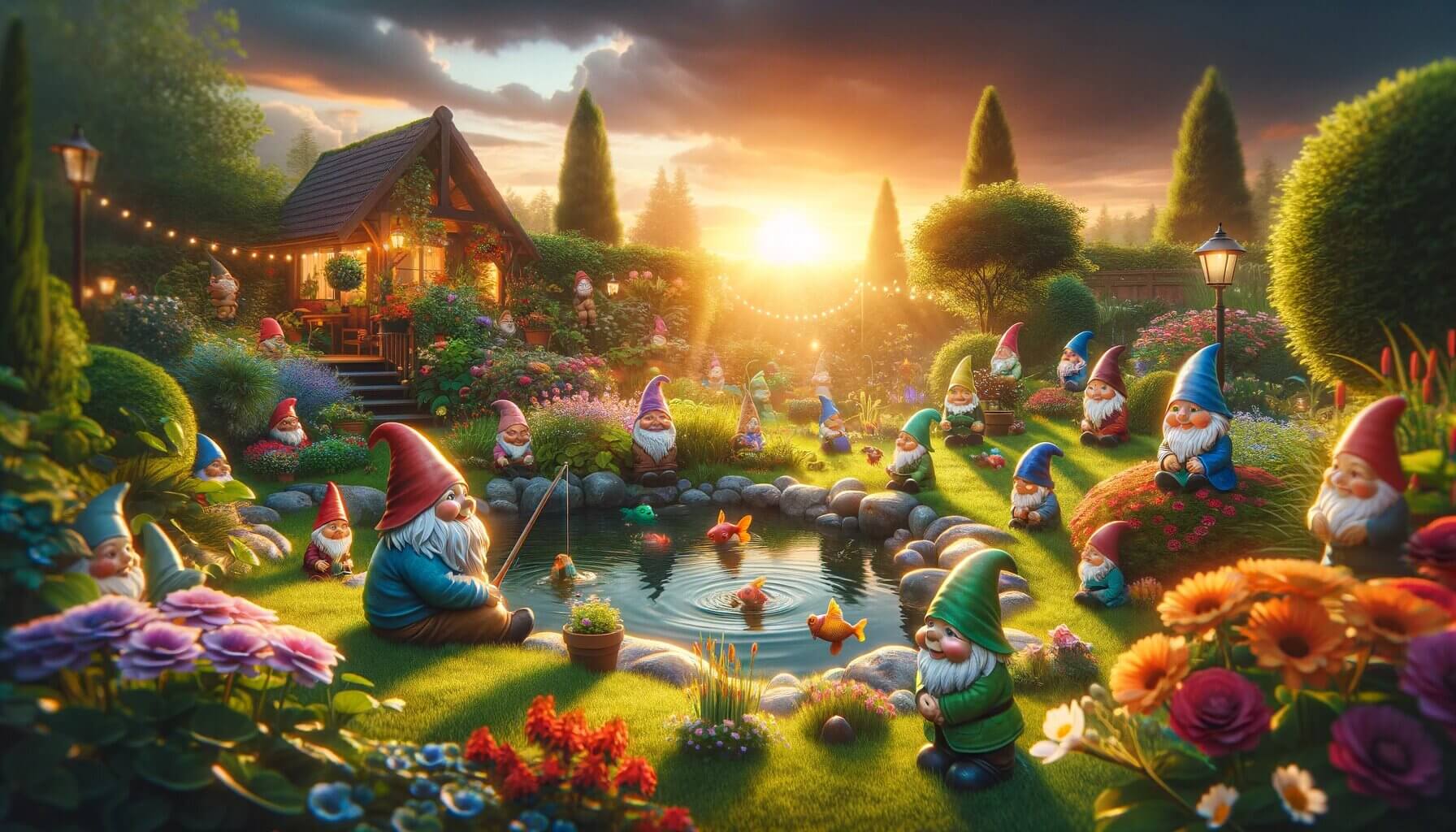
Garden gnomes are small statues that are often found in gardens. They depict fantastic creatures such as dwarves, goblins, or gnomes.
You have probably already seen garden gnomes in the gardens of your friends, your family, or even in your own garden. But have you ever wondered what these little statues mean? In this article, we explore the history and significance of garden gnomes, these little fantasy creatures that have taken over our gardens.
What does "garden gnome" mean?
These statues are often made of resin, ceramic, or plastic and are used to decorate gardens, courtyards, and terraces.
Why are they called "garden gnomes"? Quite simply, because these little statues were originally intended to decorate gardens. Garden gnomes were created in the early 19th century by German craftsmen who wanted to make decorative figures for gardens.
Why do people put garden gnomes in their gardens? The answer is simple: garden gnomes add a touch of humor and fantasy to outdoor spaces. They can also represent a connection to mythology or pop culture.
Garden gnomes can also have a more personal meaning for some people. They can be a reminder of childhood, a gift from a special person, or simply an object that brings joy and positivity into their lives.

What is the history of garden gnomes?
The history of garden gnomes dates back to the Renaissance, when gardens became a place of artistic expression. Dwarves and other fantastic creatures first appeared in European gardens, where they were used as decorative elements to add a touch of magic and mystery to the green spaces.
In the 19th century, garden gnomes became increasingly popular in Germany and England. Gnome statues, especially in British gardens, appeared, made of ceramic, plaster, or stone. These statues were mass-produced and became an essential accessory for garden decoration.
Over time, garden gnomes became a symbol of kitsch and bad taste. However, in the 1990s, they experienced a resurgence thanks to their appearance in the German television series "Gartenzwerge". Since then, garden gnomes have become popular again, even among the younger generation.