
Introduction
Garden Gnomes: A German Tradition
Garden gnomes have been a symbol of charm and character in German gardens for centuries. These little figures have evolved from simple decorations into an integral part of German garden culture. In this article, we will explore the history, the different styles, and the best practices for choosing and caring for your garden gnomes.

History of Garden Gnomes
Origins and Development
The origins of garden gnomes date back to the 19th century, when they first appeared in Thuringia. These early gnomes were handmade clay figures that were often hand-painted. Over time, garden gnomes spread throughout Germany and soon became popular worldwide. Today, they can be found in many gardens around the world and remain a symbol of German craftsmanship and tradition.
Significance in German Culture
In German culture, garden gnomes are much more than just decorations. They symbolize luck, prosperity, and a good harvest. Many Germans believe that a garden gnome in the garden protects the house and the garden. These figures also represent the love of nature and the joy of gardening, making them a popular gift and collectible.
Different Types of Garden Gnomes
Classic Garden Gnomes
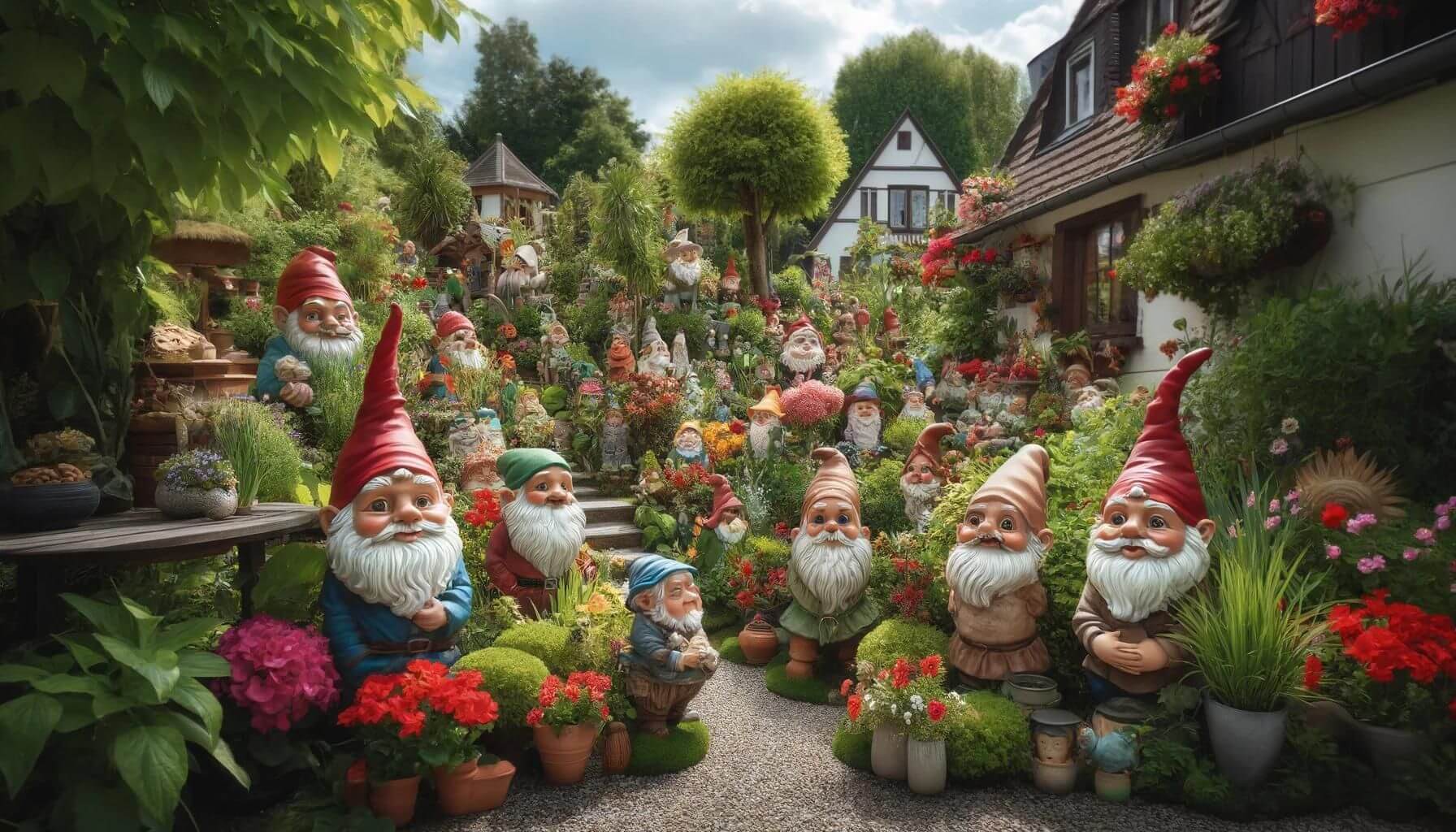
Classic garden gnomes are easily recognizable by their red hats, white beards, and cheerful faces. These traditional figures often carry tools or animals and depict scenes from rural life. A true classic garden gnome is handmade and hand-painted, making it unique and valuable.
Modern and Creative Designs
In recent years, the design of garden gnomes has continued to evolve. There are now humorous and creative designs ranging from caricatures to famous personalities. These modern gnomes add a personal touch and an element of surprise to your garden. They are ideal for gardeners looking for something unique and extraordinary.
Materials and Craftsmanship
Garden gnomes are made from various materials, including clay, ceramic, plastic, and resin. Clay and ceramic gnomes are traditional and often intricately hand-painted, while plastic and resin gnomes are lighter and more weather-resistant. The choice of material depends on your personal style and the climatic conditions in your garden.
Choosing the Perfect Garden Gnome
Tips for Choosing
When choosing the perfect garden gnome, you should consider the size, style, and durability. Take the overall design of your garden into account and choose a gnome that fits harmoniously into the picture. Also pay attention to the quality of craftsmanship and the details that define the gnome's character.
Placement in the Garden
The placement of your garden gnomes is crucial to achieving the desired effect. Place gnomes in flower beds, on terraces, or along garden paths to create interesting and charming scenes. Experiment with different positions to achieve the best effect and bring your garden to life.
Care and Maintenance
Cleaning and Upkeep
To keep your garden gnomes in good condition, regular cleaning is important. Use mild soap and water to remove dirt and deposits. Avoid harsh cleaning agents that could damage the paint or material. A soft brush can help clean hard-to-reach areas.
Protection from the Elements
Protect your garden gnomes from extreme weather conditions by bringing them indoors during heavy rain or frost. A coat of clear varnish can help protect the paint and material from UV rays and moisture. Store the gnomes in a dry, frost-free room during the winter to extend their lifespan.
Conclusion
Why Garden Gnomes Are a Great Investment
Garden gnomes are more than just decorative elements; they are an expression of culture, craftsmanship, and personal style. They bring joy, luck, and character to your garden. By choosing and caring for the right garden gnome, you can enrich your garden design and continue a long-lasting tradition. Invest in quality and choose gnomes that will accompany you for many years to come.