
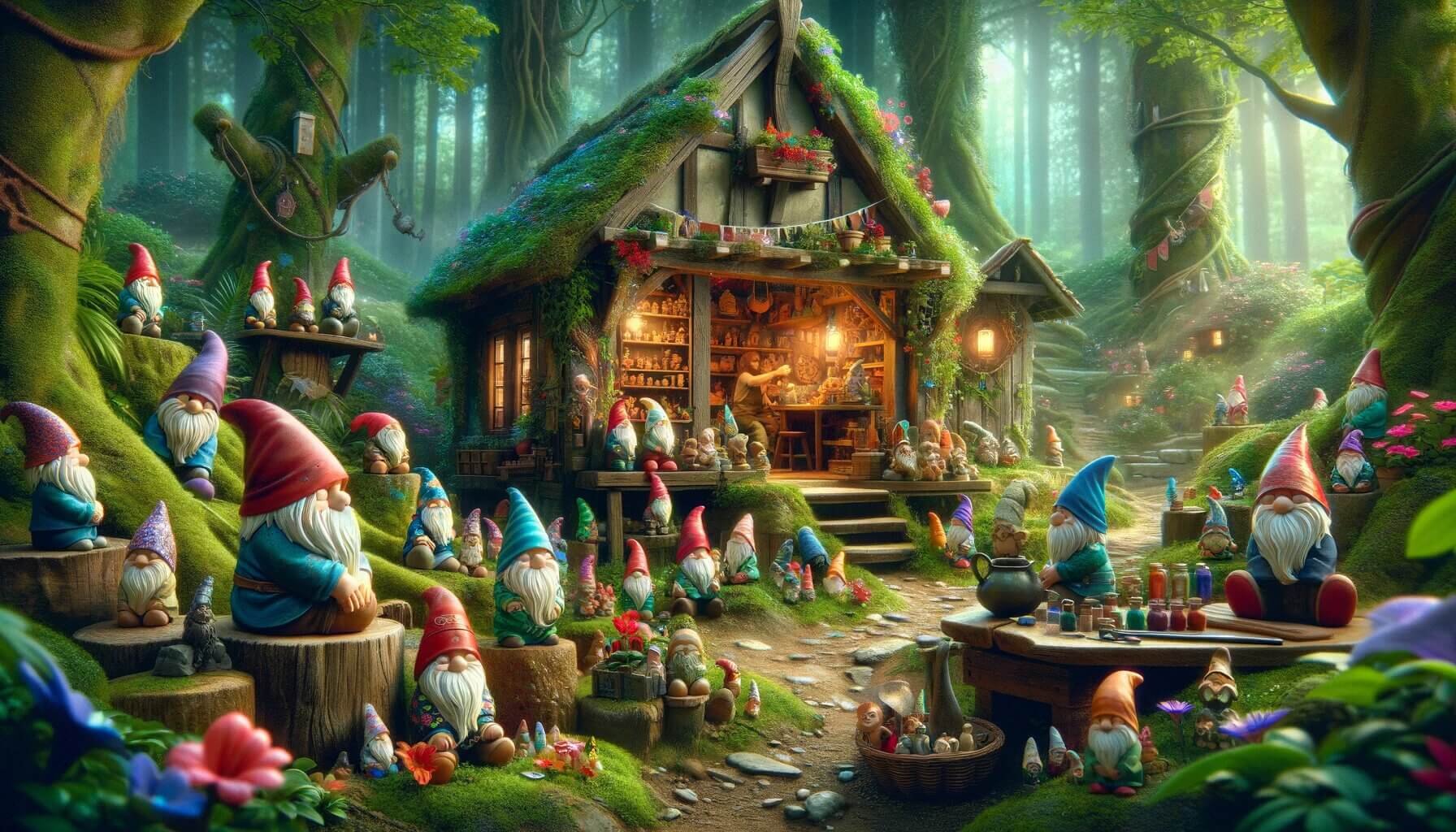
At GartenzwergeLustig, we see all kinds of garden gnome figures. To be perfectly clear: we don't prefer one over the other, because we are well aware that the garden gnome that suits its owner is very personal!
We would like to tell you a little more about how high-quality ceramic garden gnomes are made, especially those rooted in a rich history and originating from original designs and shapes.
A Giant Among Garden Gnomes - Philipp Griebel
The village of Gräfenroda in the state of Thuringia claims to be the birthplace of the garden gnome. Young Phillip Griebel apprenticed with Heinrich Dornheim, a ceramic manufacturer in the village. He then founded his own factory in 1874 and, in collaboration with other local ceramic manufacturers, produced a variety of clay figures. Shortly thereafter, Griebel began making garden gnome figures.
Griebel's gnomes, like those of other manufacturers of the time, were a reflection of the miners who had worked in the region. He created them with their red hat, which was meant to protect their neck and shoulders from falling rocks, their work clothes, their lantern, and their wheelbarrow or basket. At its peak, the factory produced around 300 gnome figures in various sizes. Philipp Griebel's company also flourished under the leadership of his son Wendelin and his son Willi, and continues to do so today under Reinhard's leadership.

How Garden Gnomes Are Made
Reinhard, Willi Griebel's son, still uses the original patterns and molds and has resumed the production of traditional garden gnomes made of high-quality ceramic, which are generally known as the "Gnome of Gräfenroda". Today, the company is the only remaining ceramic manufacturer in Gräfenroda, where signs proudly point out that the town is the "birthplace of garden gnomes", i.e. the "cradle of the garden gnome". Next to the factory is a small museum where old and new garden gnomes are on display.
With the support of his wife Iris, Reinhard shapes the small figures by hand and gives them names such as Baldwin, Anton, Max, Heinz, and many others.
Using local clay mixed with his own ingredients, Reinhard makes a slurry that is poured into a plaster mold, which is made according to the original models passed down from father to son. Excess clay is poured out again, and he lets the rest harden before taking the mold apart.
The new gnome is removed from the mold, hung up to dry, and assembled from individual parts. It is rubbed and polished to remove seams and unevenness before being placed in the kiln and fired at a temperature of 1080 degrees.
After the gnome has cooled, it can be painted. First, the garden gnome's face and beard are painted, which gives it its uniqueness, then the clothes, and finally the red hat. Finally, the gnome is painted. A perfectly crafted garden gnome can now be packaged and set off on a journey to a new home, where it will take an honorary place.